This year's "Government Work Report" proposed to "continue to support the consumption of new energy vehicles" and "accelerate the formation of a green and low-carbon production and lifestyle". Today, my country's new energy vehicle industry has entered a new stage of rapid development of large-scale and high-quality.
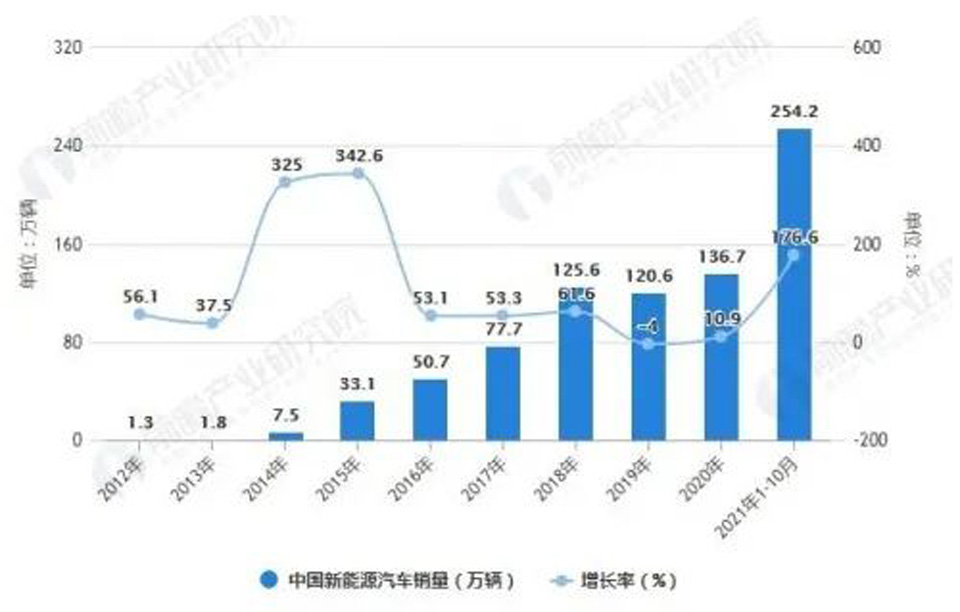
Sales and Growth of New Energy Vehicles in China from 2012 to 2021
Source: China Association of Automobile Manufacturers Qianzhan Industry Research Institute
As the hottest segment of the current auto industry, new energy vehicles bucked the trend in the first quarter of this year and continued to maintain a growth trend. According to the Passenger Vehicle Market Information Joint Conference, in March 2022, the national retail sales of new energy vehicles will be 445,000 units, an increase of 137.6% year-on-year and a month-on-month increase of 63.1%.
The number of private new energy vehicle owners has surged, and destination charging has become the most mainstream scene
When pollution reduction, carbon reduction and green travel become a new trend, the advantages of new energy vehicles are self-evident. In recent years, new energy vehicles have entered more and more ordinary people's homes and become the main vehicle for family vehicles.
"It's been almost a year since I bought a new energy vehicle, mainly for commuting to and from get off work." Mr. Chen, who works and lives in Shenzhen, said in an interview with reporters: "Usually charging is done in the company's park, and after arriving at the company in the morning, it will be charged directly after parking. , and then pull the gun at any time when it is fully charged, because it has to be stopped at the company for a day, so it is charged by the way, which is convenient and worry-free, and the slow charging does not damage the battery, so you can rest assured that it is charged for more than a few hours.”
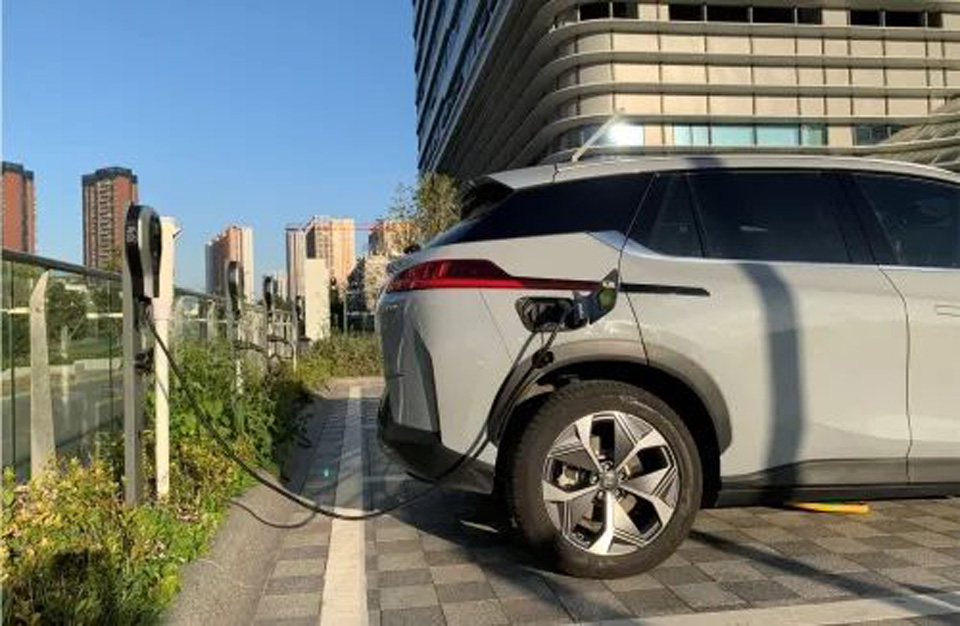
Outdoor parking and charging scene in the office park
The scene described by Mr. Chen is already the main charging scene for most private new energy vehicle owners. During weekdays from Monday to Friday, "stop and charge at any time" in the company park can not only meet the daily commuting to get off work, but also basically meet the short-distance travel on weekends.
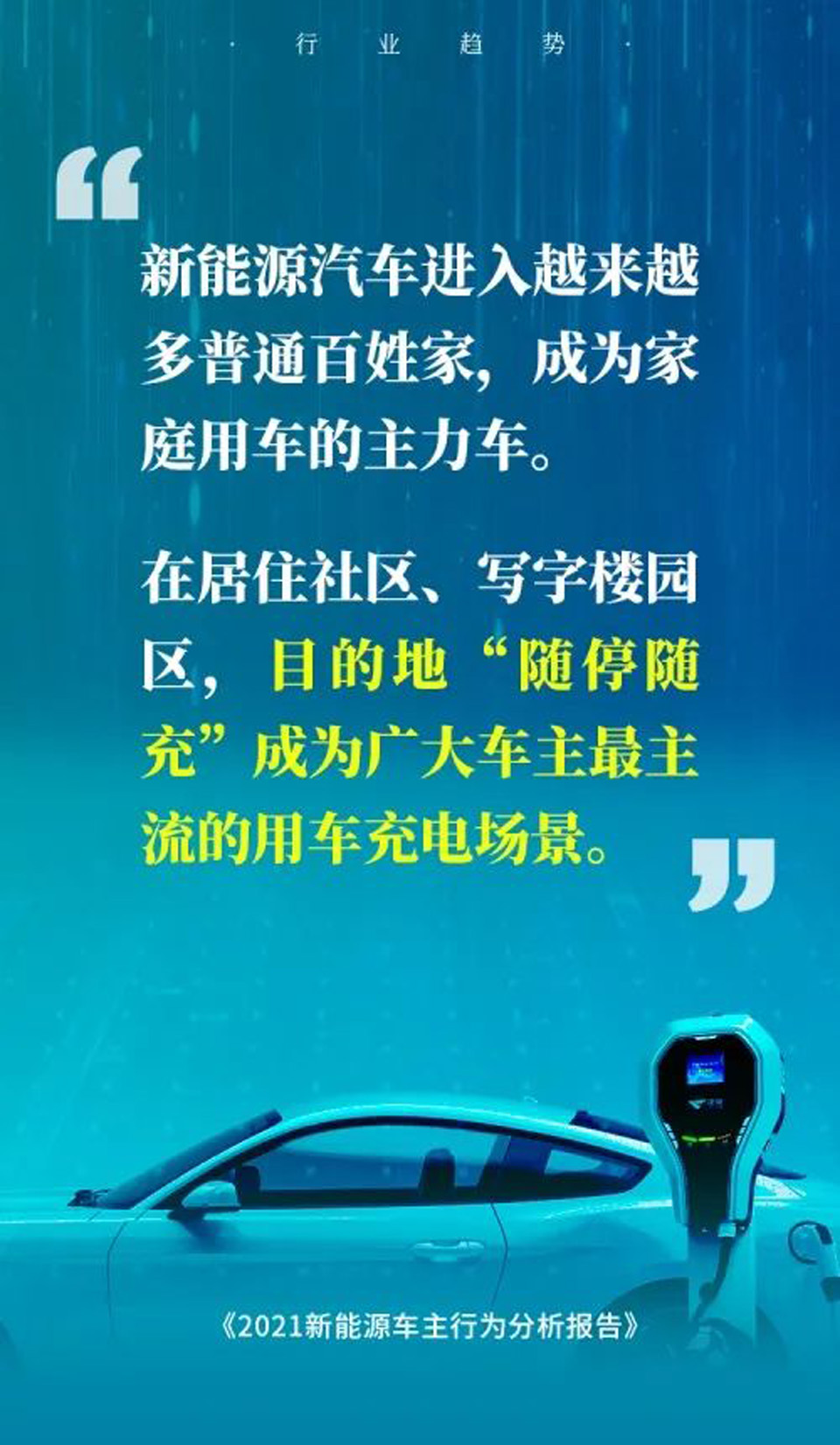
For private new energy vehicle owners, charging is basically completed at the destination where the vehicle is parked for a long time, including the scene of long-term parking in office parks and residential areas. With the increasing number of such car owners, this is a rapidly developing market opportunity for charging facilities in office parks and residential communities such as office buildings.
In this regard, Tong Zongqi, director of the Information Department of the China Electric Vehicle Charging Infrastructure Promotion Alliance (referred to as "China Charging Alliance"), said: "The future development trend is that electric passenger vehicles will be mainly charged in residential areas, supplemented by public charging, and replaced by electric vehicles. Electricity is supplemented. Private charging stations are expected to account for 65% of new charging stations, and private charging stations will provide less than 40% of the charging capacity.”
Beijing's "14th Five-Year" Energy Plan: Promote the integrated development of parking and charging
At the same time, various places are also making efforts to promote the supporting facilities for charging at the destination. Taking Beijing as an example, on April 1, Beijing officially released the "Beijing Energy Development Plan during the 14th Five-Year Plan" period.

Beijing issued the "Beijing Energy Development Plan during the 14th Five-Year Plan Period"
The "Planning" clearly states that it is necessary to build a network of electric vehicle charging facilities based on residential and office charging, supplemented by social public rapid power supply, and form a service system with vehicle piles, complementary scenes, intelligent, efficient, safe and convenient service system. By the end of the "14th Five-Year Plan" period, the city's accumulative number of electric vehicle charging piles will reach 700,000.
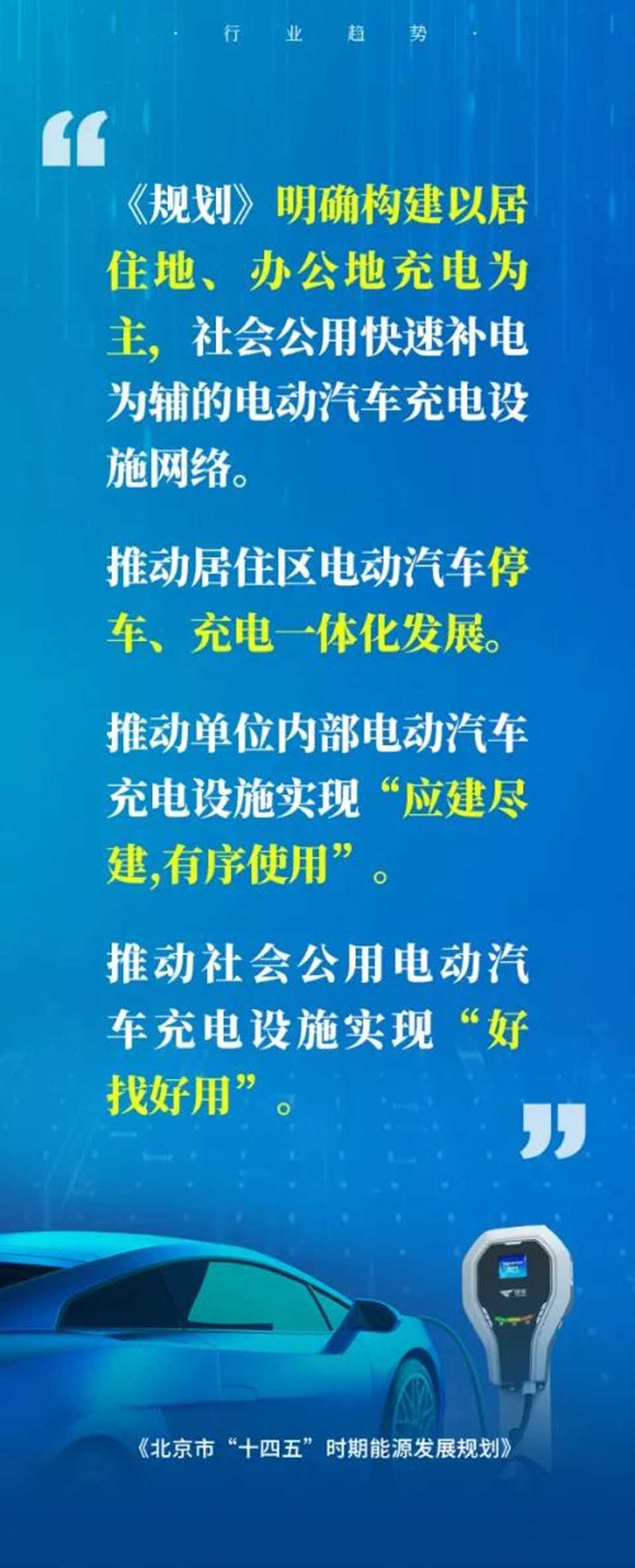
1. Promote the integrated development of electric vehicle parking and charging in residential areas.
—— Study and formulate opinions on the construction and management of electric vehicle charging facilities in residential areas, and include community public piles in the scope of subsidies for the construction and operation of public charging facilities. Establish a private pile sharing mechanism, initially form a new construction and utilization model of responsibility sharing, benefit sharing, and multi-party participation, and promote the integrated development of parking and charging.
2. Promote the electric vehicle charging facilities within the unit to achieve "everything should be built and used in an orderly manner".
—— Before the end of 2023, continue the subsidy policy for the construction of public charging facilities within units, revise the measures to encourage the construction of public charging facilities within units, and include the construction and operation of charging facilities within units into the energy-saving assessment of public institutions. By 2025, a total of no less than 50,000 internal charging piles will be built, and internal charging facilities will be encouraged to speed up, reduce fees, open up and share, and complement charging facilities in residential areas.
3. Promote social public electric vehicle charging facilities to achieve "easy to find and easy to use".
—— Strengthen the construction of social public charging facilities in key areas, and guide the rational distribution of public public charging piles. Before the end of 2023, focus on improving service levels, improve the evaluation system for charging facilities, and establish a social evaluation mechanism centered on user experience. By 2025, a total of no less than 60,000 social public charging piles will be built, and no less than 20 charging boutique service demonstration stations will be built.
The market has a lot of room for development, and charging services will become another important source of property income
The third-party professional organization predicts that by 2025, the number of public piles (including dedicated ones) and private piles will reach 7.137 million and 6.329 million respectively, with an annual increase of about 2.224 million and 1.794 million, and the total investment scale will reach 400 million. billion. By 2030, the market size of charging piles is expected to grow 30 times. The growth of new energy vehicles will promote the growth of the number of charging piles, and it is an indisputable fact that it will drive the development of the charging pile industry.
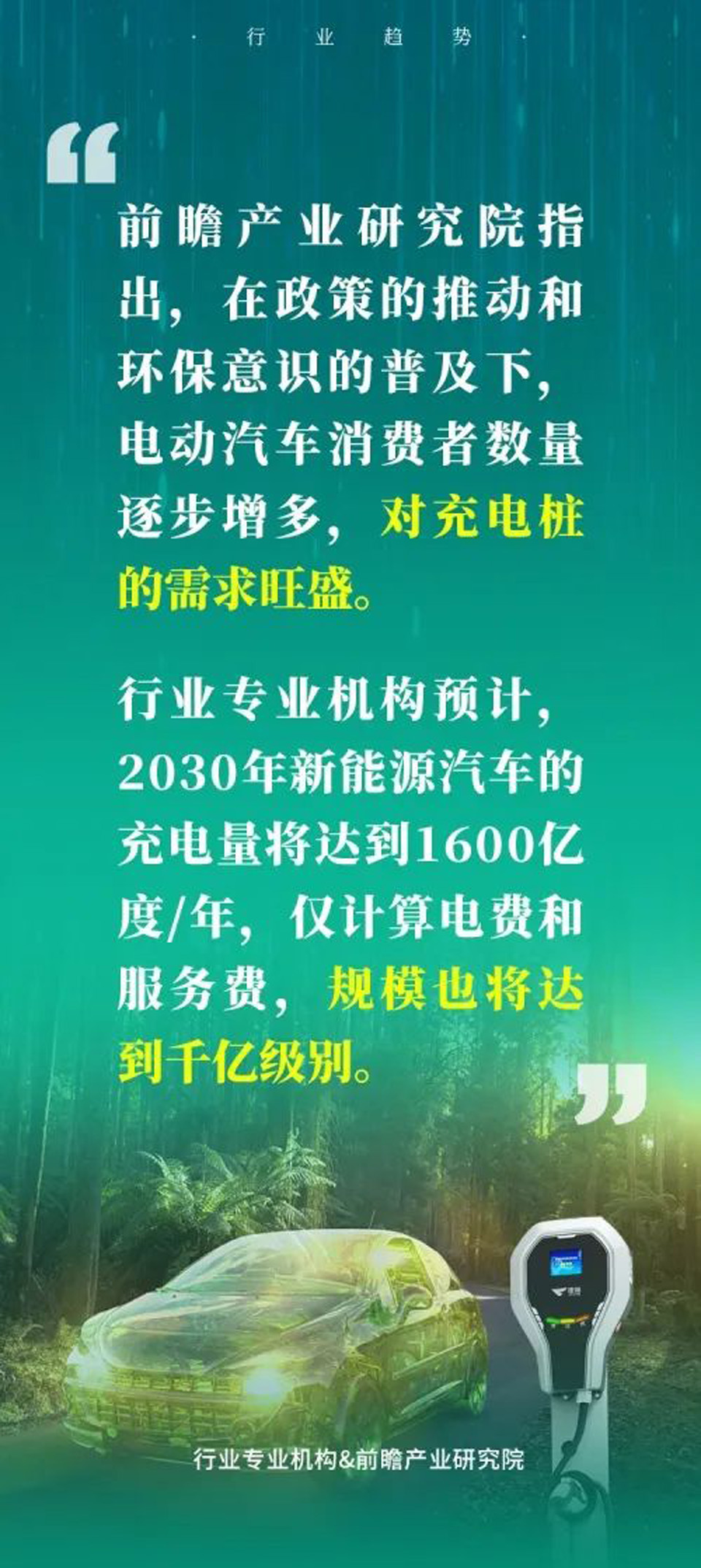
From the perspective of the long-term development of the industry, the charging pile from manufacturing, construction to operation services will reach the level of one trillion yuan. Industry professional organizations predict that the charging capacity of new energy vehicles will reach 160 billion kWh/year in 2030, and the scale will also reach 100 billion if only electricity and service fees are calculated.
As the mainstream trend of destination charging, parks and community scenarios will be the main consumers of charging capacity, and related service operating expenses will become another important source of income for the property.
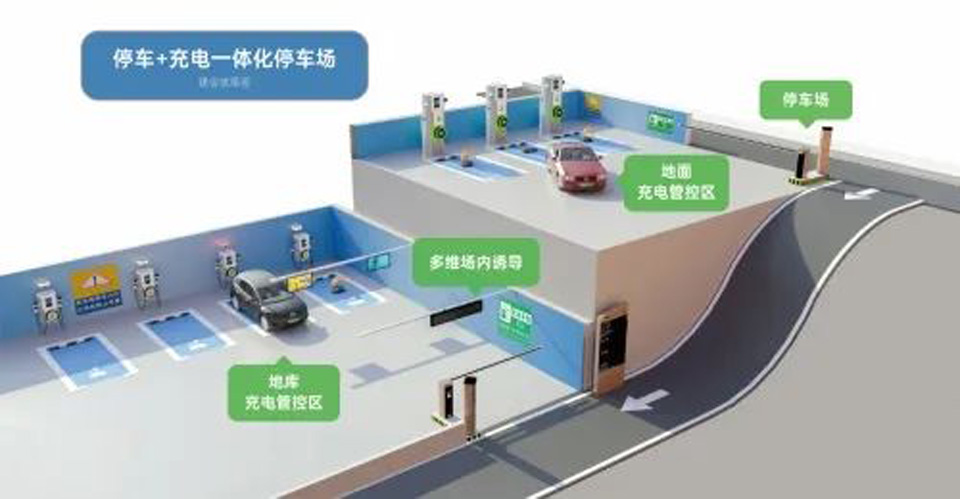
Jieshun Technology's parking + charging integrated parking lot construction renderings
In the future, the configuration of parking lot facilities will focus on "parking and charging space, efficient turnover utilization" and other aspects. The property income will include parking fee, charging fee, service fee and parking space resource occupancy fee. At present, there are many properties The company is deploying a parking + charging integrated system in advance to meet the general trend of future development.