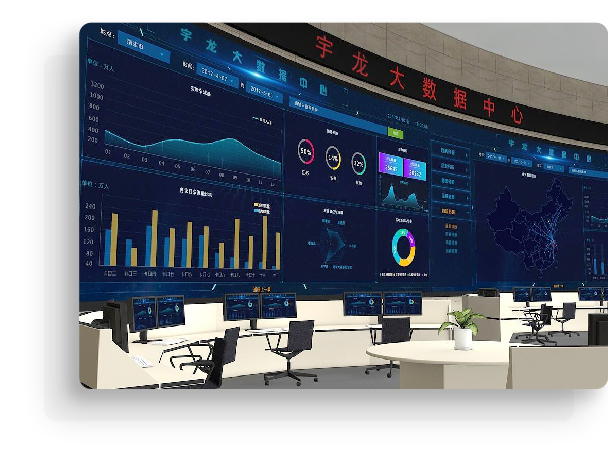
The overall solution of Yulong's new energy vehicle smart transportation city is to integrate new energy vehicle mainframe manufacturers, charging and replacing equipment manufacturers and operators, new energy vehicle supporting financial parties, Through the integration of Yulong's new energy vehicle big data operation and management cloud platform, it uses its own platform advantages to benefit local governments while developing the new energy vehicle industry, through massive taxation and employment.
The development of new energy vehicles is unstoppable. To develop the new energy vehicle industry, infrastructure must go first. Whoever can seize the first opportunity in this market will have more opportunities to occupy the commanding heights of this market, and the prospects are unlimited. Yulong Automobile and the local government jointly build a new energy vehicle demonstration city in Liaoning Province and Northeast Asia. Through the friendly cooperation between the two parties, while bringing blue sky and green water to the local people, it will maximize the local economic benefits, thereby achieving both social and economic benefits.

Using Internet + technology, with the new energy operation management platform as the core, it perfectly combines people, vehicles and piles to realize the connection of all things.

Taking prefecture-level municipal districts as the center, gradually covering the surrounding districts and counties, and striving to achieve centralized management of new energy vehicle information within 3-5 years.

The funds required for smart city transportation are invested by enterprises and do not require government investment to solve the financial pressure of the government.

Data analysis refers to the use of appropriate statistical analysis methods to analyze a large amount of data collected, summarize, understand and digest them, in order to maximize the development of data functions and play the role of data. Data analysis is the process of studying and summarizing data in detail in order to extract useful information and form conclusions.
The mathematical foundations of data analysis were established in the early 20th century, but it was not until the advent of computers that the practical operation was possible and that data analysis was popularized. Data analysis is the product of the combination of mathematics and computer science.