"The production and sales of new energy vehicles continue to grow rapidly, with a market share of 19.3%." On April 11, Chen Shihua, deputy secretary-general of the China Association of Automobile Manufacturers, said, "The strategic leading role of new energy vehicles has become more prominent." With the development of new energy vehicles It has become a major trend in the transformation and upgrading of the global automobile industry, and traditional car companies have accelerated their electrification transformation.
On April 3, BYD officially announced that it would stop producing fuel vehicles. Arno Antlitz, chief financial officer of Volkswagen Group, also revealed Volkswagen's latest strategy a few days ago, and the lineup of more than 100 gasoline vehicles will be reduced by 60%. From the perspective of the industry, the radical and helpless behind the Volkswagen Group's "crazy" change is the elephant's turn.
Dong Yang, vice chairman of the China Electric Vehicle Association of 100, believes that BYD's cessation of production of fuel vehicles is a matter of course. However, for traditional car companies, electrification transformation faces policy and market pressure. First, Europe and the United States have listed a timetable for "banning combustion", and 2030 is the last red line. The second is the rapid development of electric vehicle siege strategy, and traditional car companies must respond to the general trend.
On the other hand, the transformation of traditional car companies has encountered pains. Internal constraints, transformation costs, technical challenges, and industrial chain adjustments all bring unknowable impacts. Car companies will take the load on the road, bearing the pressure while ensuring that the transformation is completed on time. At a time when the passenger car market has negative growth and electric car companies are still struggling to make profits, traditional car companies will face a big gamble.
Environmental sinners? Whose interest is the transformation hurting?
After hundreds of years of accumulation, traditional car companies have formed a huge system around internal combustion engines; and under this turbulent tide of change, electrification has become unstoppable. Whether it is from the urgency of survival or the urging of supervision, the pressure of traditional car companies is under heavy pressure. Transformation is imperative.
There are always pains and differences in transformation. The key is who will bear the pain, how long it will take, and how to resolve the differences. No one can give a "progress bar". Volkswagen and Toyota are well aware of this.
Volkswagen Group CEO Herbert Diess claims that he has led Volkswagen out of the difficult situation of "environmental sinners" for six years and now has an ambitious electric vehicle strategy that is in line with the Paris climate goals. But the union, which owns nearly half of Volkswagen, doesn't think so.
Reform is the redistribution of interests, which will inevitably harm the interests of some people. In order to speed up the pace of transformation, Diess has promoted drastic reforms; cut costs through layoffs and other means, and allocated many resources to new energy vehicles. At the Volkswagen Group's 2021 Leadership Summit, Diess invited Tesla CEO Elon Musk to participate and asked him why Tesla is more flexible.
Too drastic measures directly detonated the contradiction between Diess and the union. Diess's voice and prestige within the group has gradually diminished, and he has faced the crisis of being impeached by the trade union many times. At the end of December 2021, in a new round of personnel changes, Diess remained in office but his powers were reduced, and the position of CEO of the Volkswagen brand was removed.
For the Volkswagen Group, which is currently in a critical period of electrification, it is undoubtedly the best result for Diess to stay in office. But this does not mean that the internal constraints of Volkswagen's transformation have completely disappeared. How to handle the relationship between traditional business, interest structure and new energy vehicles is still a big test.
The electrification transformation of the Volkswagen Group is not only facing internal pressure, but also external competition. In 2021, the sales volume of the Volkswagen ID. series in China did not reach the expected 80,000-100,000 units. Feng Sihan, CEO of Volkswagen Group, attributed the unsatisfactory sales to the unstable supply of components such as chips. The industry generally believes that the ID. family's "cold" in the Chinese market is rooted in the fact that the public does not have a deep understanding of the current consumption changes in the Chinese market.
PricewaterhouseCoopers said in the research report that the ID. series is an excellent electric vehicle, but it is not intelligent enough; the Chinese market is driven by Tesla, Weilai, Xiaopeng and Ideal, and has entered the second stage of electric vehicles, namely Electric car + smart car; Europe is still in the first stage, so the ID. series can sell well in Europe, but it is not well received in China.
Unlike Volkswagen Group's aggressive approach to electrification, Toyota's electrification transformation is relatively conservative. Akio Toyoda, the head of Toyota Motor, once "bombed" electric vehicles. He said that "electric vehicles are over-hyped" and that "electric vehicles are neither environmentally friendly nor economical."
In fact, Toyota is one of the first traditional car companies to enter this new energy track; it's just that Toyota has previously preferred the layout of hybrid and hydrogen fuel cell vehicles. Japanese companies are exploring new hydrogen energy technologies with the whole country. The Japanese government and car companies are more inclined to promote hybrid vehicles, believing that this is a more economical model.
From the perspective of the global automobile market, with the continuous reduction of costs, pure electric vehicles have become the main direction for the transformation and upgrading of the global automobile market.
In the Chinese market, Toyota, which lacks electric vehicle sales, has to face the pressure of "double points", and the existing HEV models are not enough to fill the negative points of fuel vehicles; the process of commercialization of pure electric vehicles and the pace of market trends are accelerating , forcing the elephant to turn around quickly.
In December 2021, at a press conference dedicated to pure electric vehicles, Toyota released 16 new pure electric vehicles in one breath, and further clarified Toyota's electrification development direction.
The active and passive behavior of car companies under the "burn-free red line"
From the perspective of the industry, it is not surprising that BYD has stopped production of fuel vehicles. Previously, BYD chairman Wang Chuanfu has repeatedly called for a complete ban on the sale of fuel vehicles in public.
From the perspective of the domestic market, BAIC Group, Changan Automobile, and Haima Automobile also have plans to stop selling fuel vehicles. The three companies announced in 2017 and 2018 that they expected to completely stop selling traditional fuel vehicles by 2025.
From the perspective of the international market, Jaguar Land Rover announced that it will no longer produce fuel vehicles as soon as 2025, Volvo said that its goal is to become a pure electric car company by 2030, MINI and Bentley will achieve full electrification in 2030, Fiat expects 2030 In 2018, the production of fuel vehicles will be stopped. Lexus and General Motors will stop selling fuel vehicles in 2035. Honda plans to stop selling fuel vehicles in 2040.
Different from the above-mentioned car companies that have fully specified the year of full electrification or clearly stopped selling fuel vehicles, domestic SAIC Group, FAW Group, GAC Group, and foreign Volkswagen Group, BMW Group, Audi, Mercedes-Benz, Ford Motor, Toyota Motor and other car companies are not The timetable for completely stopping the sale of fuel vehicles has not been clarified, and increasing the proportion of electrification has become a more important layout.
Mei Songlin, a senior analyst in the automotive industry, believes that most models have not clearly banned combustion. On the one hand, the long-term development trend of the electric vehicle market is not clear; Vehicle products replace the current main fuel vehicles. Cui Dongshu, Secretary-General of the National Passenger Vehicle Market Information Joint Association, told Shell Finance reporters, "BYD's suspension of sales of fuel vehicles is an independent choice of enterprises. Every enterprise has production advantages. At present, there is still a huge market demand for ordinary fuel vehicles. Stopping the sale of fuel vehicles is just a future choice for some companies."
Despite different attitudes towards banning combustion, electrification has clearly become the development direction of traditional car companies.
From the perspective of the domestic market, the "New Energy Vehicle Industry Development Plan (2021-2035)" clearly states that by 2025, the sales of new energy vehicles will reach about 20% of the total sales of new vehicles; in addition, the "Carbon Peak Action before 2030" The plan pointed out that the proportion of new energy and clean energy-powered vehicles planned to reach about 40% in 2030; new energy vehicles will be further supported; at the same time, under the constraints of the double-point policy, car companies have to accelerate the transition to new energy.
From the perspective of the international market, Guotai Junan analyzed that the 2030 goals of foreign car companies are mostly set according to policy requirements and are subject to the increasingly stringent emission standards of the government.
The "Fit For 55" climate package announced by the European Union in July 2021 pointed out that by 2030, the emissions of cars and trucks will drop by 55% and 50% compared with 2021, achieving "zero-carbon transportation"; in August of the same year, the United States proposed In 2030, pure electric vehicles, plug-in hybrid electric vehicles and fuel cell vehicles will account for half of all new passenger car sales; two months later, the British government announced the official implementation of the "net zero strategy", in 2030 A complete ban on the sale of new gasoline and diesel vehicles; like the United Kingdom, Denmark, Iceland, Slovenia, Sweden, the Netherlands and other European countries have also put forward regulations or initiatives to "ban combustion" in 2030. In addition, the Japanese government has also proposed to stop the sale of new fuel-powered vehicles in the mid-2030s and fully promote the electrification of vehicles; among them, Tokyo will complete this goal by 2030.
In addition to policy constraints, the electrification layout of car companies is also based on the desire to "earn more". According to PricewaterhouseCoopers research, by 2030, the profit share of traditional car companies in the global auto industry may drop from 85% to less than 50%; this means that emerging technologies such as electric vehicles are the main source of profit for many car companies in the future. Focus; the purpose of electrification transformation of major car companies is self-evident.
It was no accident that the elephant turned around. Zipse, chairman of the BMW Group, believes that "the success of an innovative technology depends not only on whether it can be industrialized under highly complex conditions, but also on the right timing."
Breaking the boat: A bet on the market and profits
On the track of new energy vehicles, Volkswagen and Toyota are typical representatives of traditional car companies.
According to the analysis of Zhongda Consulting Research Institute, driven by the negative growth of the passenger car market, the continuous penetration of the new energy vehicle business, the pressure on the traditional fuel vehicle business due to energy-saving and environmental protection policies, the transformation of consumer demand, and the reconstruction of the added value of the supply chain, the transformation into A must for traditional car companies. In this transformation, the transformation of the elephant is not smooth sailing, it is more like a big gamble.
Xu Haidong, deputy chief engineer of the China Association of Automobile Manufacturers, said that the new forces have been fully electrified from the beginning, while traditional car companies may often place too much emphasis on the fuel vehicle business, and at the same time, the change in consumer demand for electric vehicles has not changed so quickly; traditional car companies mainly The pressure may come from its original thinking mode, and traditional car companies need to change their thinking concepts.
Mei Songlin believes that "technologies, products, and business models have undergone drastic changes in the electrification era, and traditional fuel vehicles do not have these new capabilities. They need to change their thinking, re-learn, destroy an old world, and create a new world." He believes that at present The typical challenges and difficulties of traditional car companies include three electric, software, intelligent driving and so on.
In the era of fuel vehicles, Volkswagen is the overlord; but in the era of electrification, Volkswagen still needs to learn from it. In the early stage of ID.3 delivery, the delivery was delayed due to software problems; the ID. series also failed to obtain the expected sales in the domestic market.
For traditional car companies to develop new energy vehicles, the business and historical burden is too great. "Traditional car companies such as Volkswagen still focus on fuel vehicles. Volkswagen's new energy vehicles account for less than 5%, and Toyota's pure electric vehicles account for less than 0.5%. Fuel vehicles are still the main contributors to revenue and profits. , the proportion of new energy vehicles is low." Zhang Xiang, director of the New Energy Vehicle Technology Research Institute of Jiangxi New Energy Technology Vocational College, said.
"In fact, traditional car companies don't need to blindly stop selling fuel vehicles early. Fuel vehicles also have huge market demand. This is also the difficulty of their electrification transformation, that is, traditional fuel vehicles are burdened." Cui Dongshu said.
In the intelligent track, the technology genes of traditional car companies are also relatively weak. "For traditional car companies, the electrification transformation needs to re-develop a new platform. At the same time, traditional car companies are relatively lacking in core technologies such as battery motors and intelligent software." Zhang Xiang said, "Traditional car companies need to face technology and technology to transform into electrification. There are many risks such as not being able to keep up, and the investment cannot be fully recovered. For example, due to the inability to keep up with the progress of intelligentization, the Volkswagen ID.4 has not been listed for a long time.”
In addition, in the transformation of electrification, traditional car companies still need to bear the pressure of cost. Stellantis CEO Carlos Tavares publicly stated at the end of last year that the electrification transformation of traditional car companies will increase the cost by 50%, and car companies cannot pass this 50% additional cost on to final consumers. It may threaten itself because the cost increase brought about by the electrification transition is beyond the ability of traditional car companies.
In the early days of electrification, new energy vehicles could not create profits for car companies. In 2021, BYD will increase revenue but not profit. At the same time, among non-recurring revenue, government subsidies for new energy vehicles have the highest sense of existence, which is nearly twice the annual net profit. The difficulty of making new energy vehicles profitable is a common phenomenon in the industry. At present, almost all car companies that only produce new energy vehicles are in a state of loss, and the new force "Wei Xiaoli" is no exception; in 2021, Weilai Automobile will lose 4.016 billion yuan, Xiaopeng Motors will lose 4.863 billion yuan; Ideal Auto will lose 3.22 billion.
Not only that, Mei Songlin believes, "In the transformation of electrification, traditional car companies are not very attractive to external investors. It takes more patience and time to transform a traditional car company than to invest in a new car company."
To this end, last year Honda publicly stated that in order to accelerate the profit of electric products as soon as possible, Honda is willing to form alliances with other car manufacturers. A few days ago, Honda and GM once again officially announced an agreement to deepen cooperation. GM made it clear that the alliance can further dilute product development costs.
"The core of the electrification transformation of traditional car companies lies in two aspects, one is to clarify the strategic goal of new energy transformation, and the other is how much money can be invested under the strategic goal." Xu Haidong said, "Only when you have money, can talent reserve and technology research and development be carried out. Wait for the layout."
Multiples go hand in hand: there are multiple paths for new energy
There are still many "stumbling blocks" for electrification.
BMW Group said that for electrified travel, the key issue is not when the internal combustion engine will be terminated, but when the travel system will be ready to accept pure electric vehicles; Electrification is destined to be empty and meaningless.
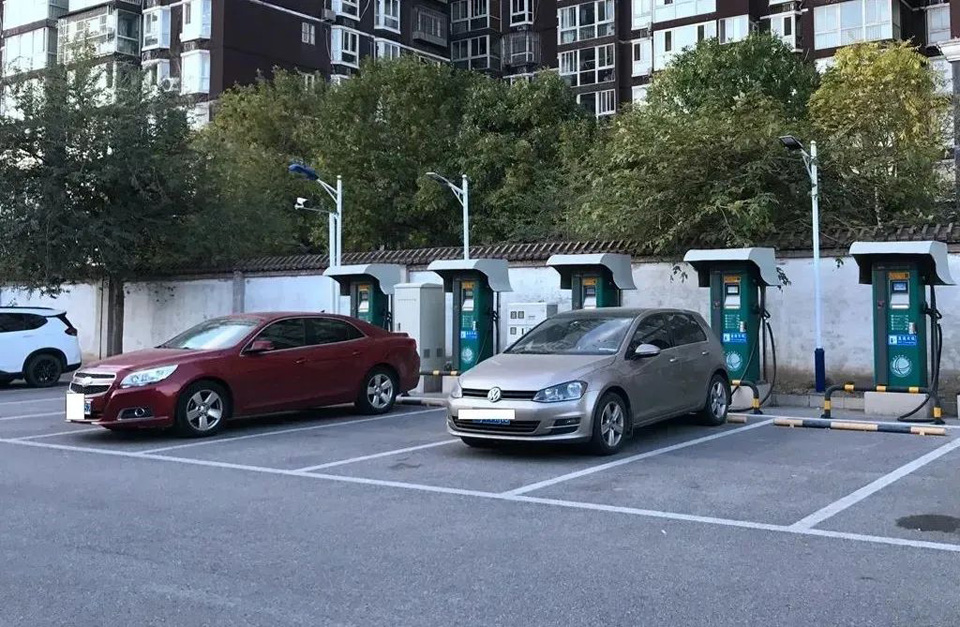
At present, the new energy vehicle market still has problems of difficulty in charging and anxiety about cruising range. According to the data of the China Automobile Association, the current total number of charging piles and swap stations is only 1.9 million, which is difficult to meet the growing new energy vehicle market. At the same time, geographical factors still have a certain impact on the promotion of pure electric vehicles. For example, very cold areas are not suitable for pure electric vehicles.
Not only that, supply chain issues such as the current shortage of raw materials are also obstacles to the electrification of car companies. Cui Dongshu believes that "whether nickel, cobalt, lithium and other raw materials can effectively meet the demand of 10 times or more than 20 times in the future is a major issue for the development of new energy vehicles in the world." SNE Research predicts that by 2023, the power battery of new energy vehicles will be used. Demand is expected to reach 406GWh and supply is expected to be 335GWh, a gap of about 18%; by 2025 the supply gap will reach 40%.
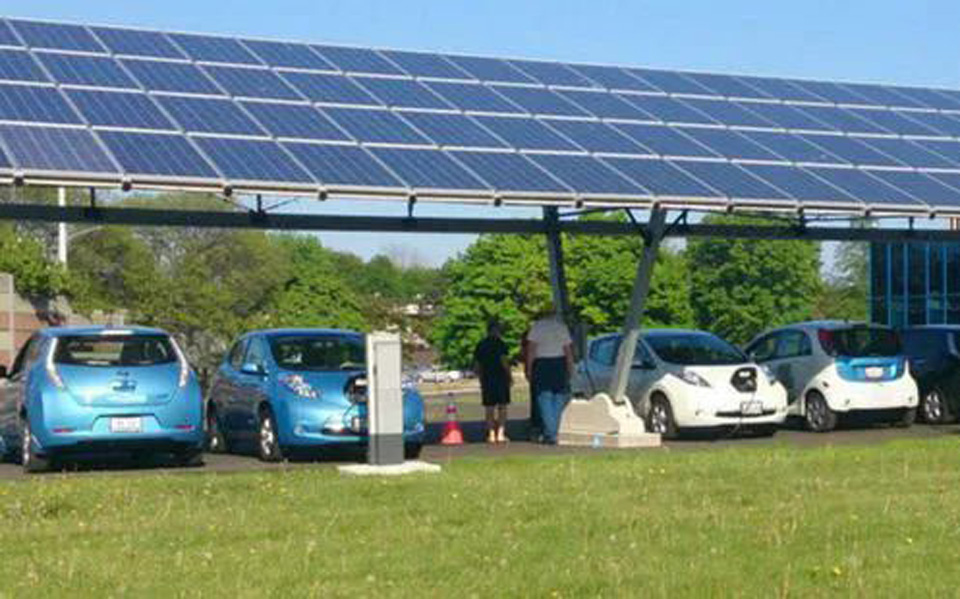
From the perspective of the layout of car companies, electrification does not mean that there is only one technical route of pure electric. Zhang Xiang believes, "Each car company's situation is different, and the basic routes chosen by car companies are also different. For example, Volkswagen is targeting pure electric vehicles, and Hyundai and Toyota are also deploying hydrogen fuel cell vehicles. Some companies may choose two or three at the same time. a technical route.”
BMW Group said, "In the future, different drive systems will coexist in travel, and hydrogen fuel cell vehicles are an important supplement to the electric drive system." Yan Boyu, President and CEO of Porsche China, said that Porsche will adhere to a "three-pronged approach" in the future. The company's product strategy, that is, the continuous optimization of traditional fuel vehicles, the development of hybrid models and pure electric sports cars led by the new Taycan. Toyota China said that Toyota has always adhered to the all-round layout of electrification technology, and laid out four technical routes of HEV, PHEV, EV and FCEV.
The industry believes that the most suitable power technology routes for different products under different conditions of use in the future will be different. Mei Songlin said that at present, the technical route of China's new energy vehicle market is obvious, that is, pure electric vehicles are the mainstay, supplemented by plug-in/range extension, and hydrogen energy is focused on the commercialization process; at the same time, we must also see that a certain route has technological breakthroughs and innovative products. The competitiveness of fuel vehicles can approach or surpass that of fuel vehicles, which will also promote the development of this technical route.
Guotai Junan analysis said that for traditional car companies, it is too difficult to let them abandon the original advantages of fuel vehicles. Therefore, the focus of traditional car companies in the future may be the first to focus on 48V mild hybrid and hybrid models. .
Mei Songlin said that the competition and cooperation relationship of various technical routes is conducive to the rapid iteration and evolution of the new energy vehicle industry, which will eventually replace traditional fuel vehicles.
It is unknown how the story of electrification will be written, and whether the ban on combustion will become a common reality.