Tesla, the U.S. electric car company, disclosed that nearly half of the vehicles it produced in the first quarter were equipped with lithium iron phosphate (LFP) batteries, a type of nickel stronger than the nickel that dominates Western markets. Cobalt batteries are cheaper batteries.
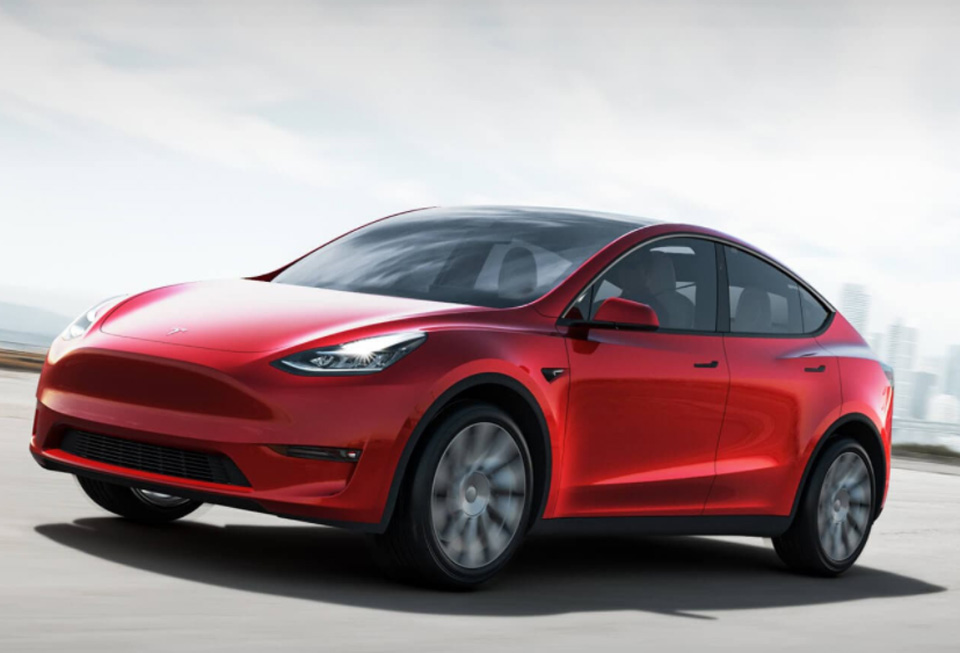
Image source: Tesla official website
Beijing time on April 28 morning news, according to reports, last week, when Tesla's profit and stock price grabbed the headlines of major media, a potentially key development in the global auto industry basically received little attention. .
Tesla, the U.S. electric car company, disclosed that nearly half of the vehicles it produced in the first quarter were equipped with lithium iron phosphate (LFP) batteries, a type of nickel stronger than the nickel that dominates Western markets. Cobalt batteries are cheaper batteries.
This is the first time Tesla has disclosed details on the makeup of its batteries, yet the news has been drowned out in other reports, such as the world's leading electric car maker's $19 billion in revenue and Musk's efforts to acquire Twitter.
The news also sends a strong signal that iron-based batteries are finally starting to gain global attention at a time when nickel is plagued by supply problems due to the Russian-Ukrainian conflict and cobalt due to the dangerous conditions of artisanal mining in the Democratic Republic of Congo. affected by the report.
Tesla isn't the only automaker seeing the potential of LFP batteries, which have been popular in China before and are now making their way to Western markets in strides.
A Reuters review of the electric vehicle sector and interviews with several players shows that more than a dozen companies are now considering building factories in the U.S. and Europe to produce LFP cells and related components over the next three years.
"I think lithium iron phosphate is getting a new lease of life and it has clear long-term advantages within the electric vehicle industry," said Mujeeb Ijaz, founder of US battery startup Our Next Energy. Our Next Energy said it is currently looking for a new production site in the United States.
Ijaz, who has worked in this field for a long time, has observed that LFP, a technology that failed to catch on in the United States a decade ago, is now gaining momentum. He was previously CTO of Michigan-based A123, an early LFP battery producer that went bankrupt in 2012 and was acquired by a Chinese company.
He and other LFP advocates argue that iron's relatively abundant reserves and low prices are a key factor in LFP's popularity. But this kind of battery also has its own shortcomings. Compared with the nickel-cobalt-manganese (NCM) ternary lithium battery, the LFP is larger in size, heavier, and has a lower energy density, which makes the electric vehicle cruising range using the LFP battery. shorter.
For EV makers wanting to use LFP batteries, the downsides are like a mountain to climb.
Data from Benchmark Mineral Intelligence (BMI) shows that in 2022, LFP batteries will account for only 3% of electric vehicle batteries used in the United States and Canada, 6% in the European Union, and the rest will be NCM batteries.
The situation in China is completely different. LFP batteries are much more competitive. Data shows that LFP has gained as much as 44% of the Chinese EV market, with the remaining 56% coming from NCM batteries.
It could be a long and difficult road for Western LFP cell makers seeking to take on rivals from China, which accounts for about 90% of global LFP production.
Compared with NCM batteries, LFP batteries also need to use more lithium, and some battery industry experts worry that as the cost of metals continues to rise, the advantages of lower production costs for iron-based batteries may gradually weaken and eventually disappear.
Tesla has long used LFP batteries in some entry-level models, and starting last year, the company started using the batteries in the entry-level Model 3 produced in the United States. A few years ago, the company started using LFP batteries from CATL, the world's largest EV battery maker, in the entry-level Model 3 made in China.
However, given the historical dominance of NCM batteries in the U.S. market, Tesla used a lot of LFP cells in the first quarter of 2022, installing them in about 150,000 vehicles produced, a move that really caught some analysts and battery experts were surprised.
Tesla did not respond to a request for comment on the issue.
Mitra Chem, co-founded by former Tesla battery supply chain manager Vivas Kumar, is currently working on making LFP battery material, with production initially in California. Kumar said he expected nickel prices to remain volatile because of supply chain dislocations. "The best safeguard an automaker has is to add more iron-based batteries to their portfolio," he said.
U.S. electric vehicle start-up Fisker, which plans to initially source batteries from CATL, also plans to use LFP batteries in its entry SUV models. But CEO Henrik Fisker said the company is in talks with battery suppliers to source batteries made in the U.S., Canada or Mexico starting in 2024 or 2025.
Locally sourced batteries is important, Fisker said, because shipping heavy battery packs from Asia is costly, especially for low-cost, high-volume vehicles, where higher battery costs can lead to higher vehicle prices. increase, thereby weakening the competitiveness of the product. It's also not environmentally friendly, the CEO added, believing that LFP batteries will play an important role in the global EV mix in the future.
He said EV owners who live in cities are driving shorter daily distances, saying: "If I never leave Los Angeles, I never leave San Francisco, or I never leave London, I think in that case, LFP With great advantages, this use case is also where LFP batteries can really come into play.”
After the Russia-Ukraine conflict, other high-end automakers are also focusing on the battery type, including Volkswagen's Audi, which has never used LFP batteries before.
Audi CEO Markus Duesmann said in March: "In the mid-term future, we may see LFP batteries make up a larger proportion of the fleet. After the war there will be a new situation, we adapt to that situation and choose battery technology and specifications accordingly.”
Joachim Post, BMW's chief purchasing officer, also recently said that the company is looking into the advantages of LFP. "We are working on different technologies to minimise the use of resources, and we are also working on optimizing the chemistry of the battery," he said.
LFP has many advantages, one of the most attractive of these advantages is that it has a lower risk of fire compared to NCM batteries and can continue to be fully charged. As the battery is used for a long time, the life and performance of the LFP battery There will be no significant loss.
As the global EV market continues to expand, LFP is expected to find its way into more entry-level consumer and commercial EVs, where range is not as critical.
However, if LFP batteries are to be widely used, there are still some shortcomings that need to be addressed, such as solutions to increase energy density, thereby reducing the size and weight of the battery itself. In addition, it needs to find a way to deal with the rising cost of lithium.
At the same time, it will take time to build factories in the U.S. and Europe and expand LFP production, and U.S. startups face scaling up to compete with the CATL era.